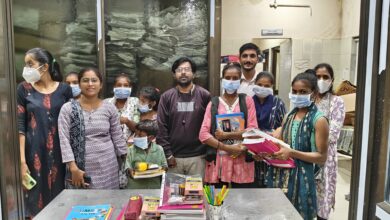


Prapti Bhavsar Marks Her Photography Debut, Capturing The Lives of a Secluded Tribal Community in India

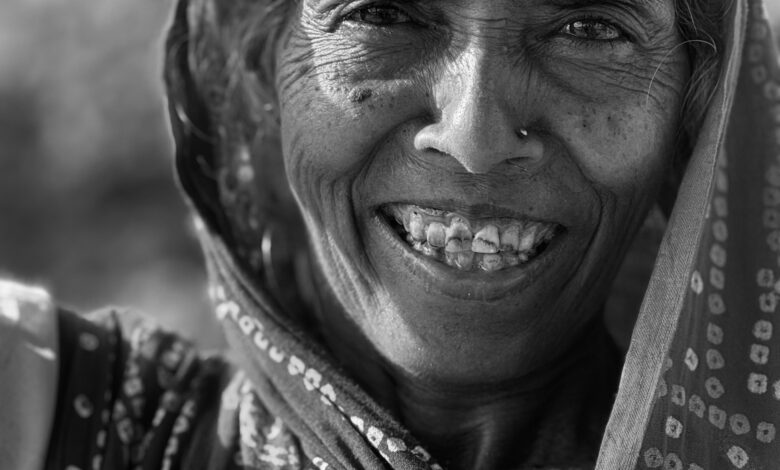
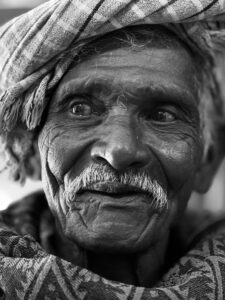
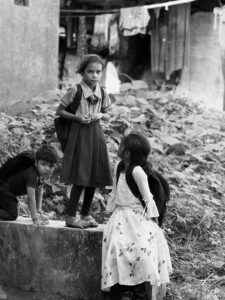
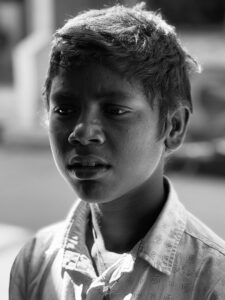
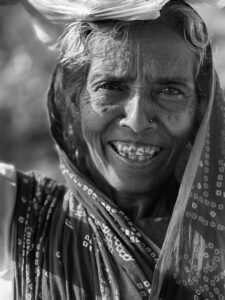
Prapti Bhavsar Marks Her Photography Debut, Capturing The Lives of a Secluded Tribal Community in India
Traveling through the remote forests and highlands of Chhota Udepur in eastern Gujarat, emerging artist Prapti Bhavsar documented the daily lives of the Adivasi tribal community rarely seen in the mainstream media. The Adivasi are recognized by the International Labour Organization as India’s first inhabitants.
They speak Rathvi, a distinct dialect of Gujarati, and primarily depend on agriculture for their livelihood. Community life is organized around fixed territories and a shared social structure.Sociologists and anthropologists describe their belief system as a “Religion of Nature,” centred on
ancestor worship and a strong sense of individual freedom and self-reliance. Among the most distinctive cultural expressions of the community are Pithora mural paintings, created by mixing colours with liquor and milk. These murals, painted on the walls of village homes, depict intricate
motifs and scenes and are offered to Baba Pithora, their chief deity, in the belief that they bring peace and prosperity.
Bhavsar is set to mark her photography debut with an exhibition titled The Oblivious: Faces of the Unseen at the Kali Niketan Palace in Chhota Udepur in the first week of January 2026.
Using photography as a means of forming human connections, Bhavsar travelled to more than 15 little-documented villages, listening to local stories and observing the resilience of everyday life.
She spent extended periods understanding the community’s philosophy of life. Their perspective on life, Bhavsar notes, differs from a modern culture increasingly focused on documentation and preservation. For the Adivasi, she says, the beauty of existence lies simply in being and becoming.
The community remains increasingly marginalized due to socio-economic barriers and cultural prejudices. Bhavsar’s work highlights their struggle in finding socially conscious representation within India. The subjects in her photographs are deeply human. The objective, says the artist, has
always been to bridge the social divisions and focus on humanity – the one thing that binds every individual and surpasses the confines of race, gender, and culture.
“We as a society are systematically taught to pity these communities by alienating their ways of life,” Bhavsar says. “The goal, especially when approaching art and culture, should be empathy and to reject any and all social hierarchies. What is humanity, if not a shared human experience?